
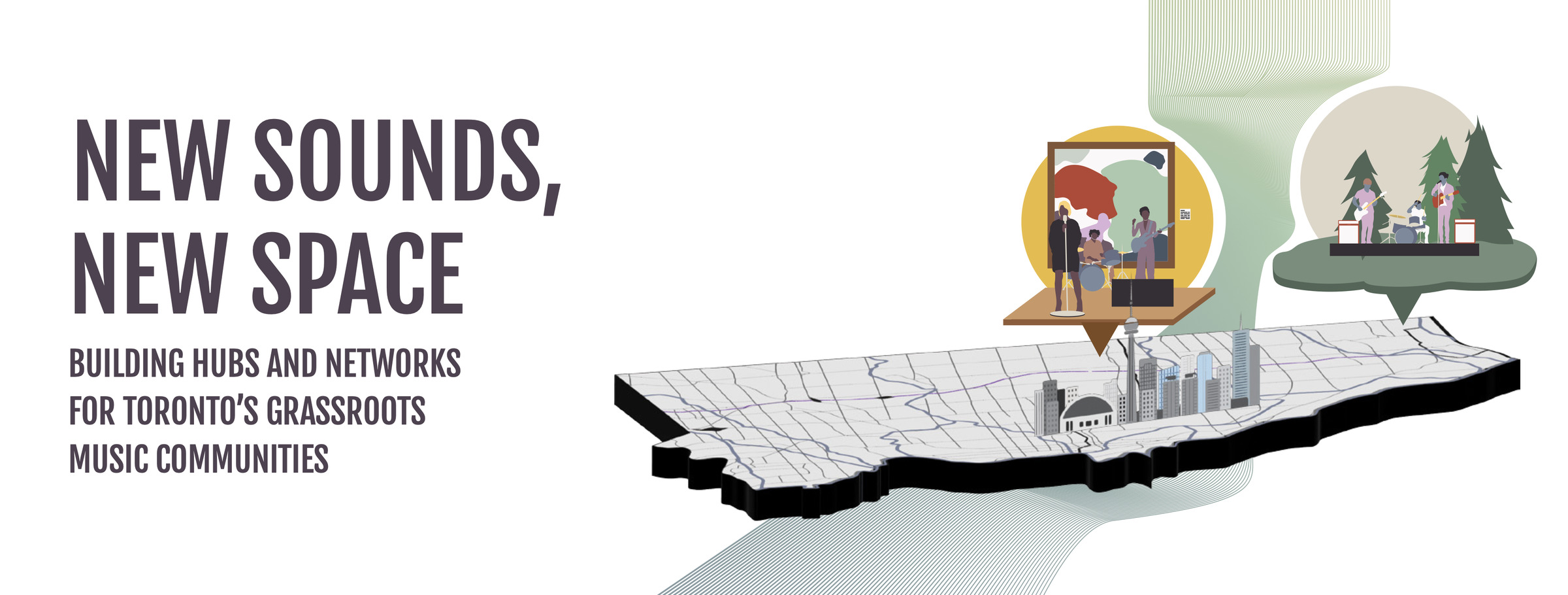
BUILDING HUBS AND NETWORKS FOR TORONTO’S GRASSROOTS MUSIC COMMUNITIES
Toronto’s grassroots and independent live music communities have long faced challenges accessing purpose-driven spaces that are essential to artistic creation and presentation. This exploratory study draws on interviews, focus groups, desk research, and concert listings data to assess the viability of music community hubs in Toronto. In a slowly recovering live music scene post-COVID, this space concept, viewed in a networked approach, is based on a multi-use, community-oriented venue model identified in Wavelength’s previous study, Reimagining Music Venues.
A follow up to 2023’s acclaimed Reimagining Music Venues Study, the launch of the “New Sounds, New Space” report explores different pathways for establishing community hubs for Toronto’s grassroots music community. With positive case studies on Hugh’s Room Live, It’s Ok* Studios, Small World Music and Primal Note Studios, the report shines light on Toronto’s post-COVID music venue landscape while pointing the way forward for imaginative new spaces. Funded by Canada Council for the Arts “Seed” grant!
Join us for the Report Launch + Wavelength Documentary Premiere on October 21
EXECUTIVE SUMMARY
Toronto’s grassroots and independent live music communities have long faced challenges accessing purpose-driven spaces that are essential to artistic creation and presentation. This exploratory study draws on interviews, focus groups, desk research, and concert listings data to assess the viability of music community hubs in Toronto. In a slowly recovering live music scene post-COVID, this space concept, viewed in a networked approach, is based on a multi-use, community-oriented venue model identified in Wavelength’s previous study, Reimagining Music Venues.
A SNAPSHOT OF TORONTO’S LIVE MUSIC SCENE, POST-COVID
Since COVID-19, Toronto has seen a partial but uneven recovery. The recent or impending closures of several iconic venues (e.g., Phoenix Concert Theatre, Velvet Underground) and numerous venues failing to launch, particularly those in the small to mid-size capacity ranges, underscore the need to move beyond traditional business models.
The seeming rebound of large events and festivals in Toronto mask a weak underlying infrastructure. Our reports on the scene and concert listings data highlight pervasive issues:
- Promoter consolidation: The city’s five largest organizers now drive over 45% of events, raising concerns around innovation and cultivating homegrown talent
- Downtown dominance: Despite concerted policy and civic efforts, there has been only marginal growth of live music activity in Toronto’s inner suburbs
- Unsustainable costs: Rental inflation, fewer all-ages rooms, and shrinking alcohol revenues challenge the already-fragile economics of live music
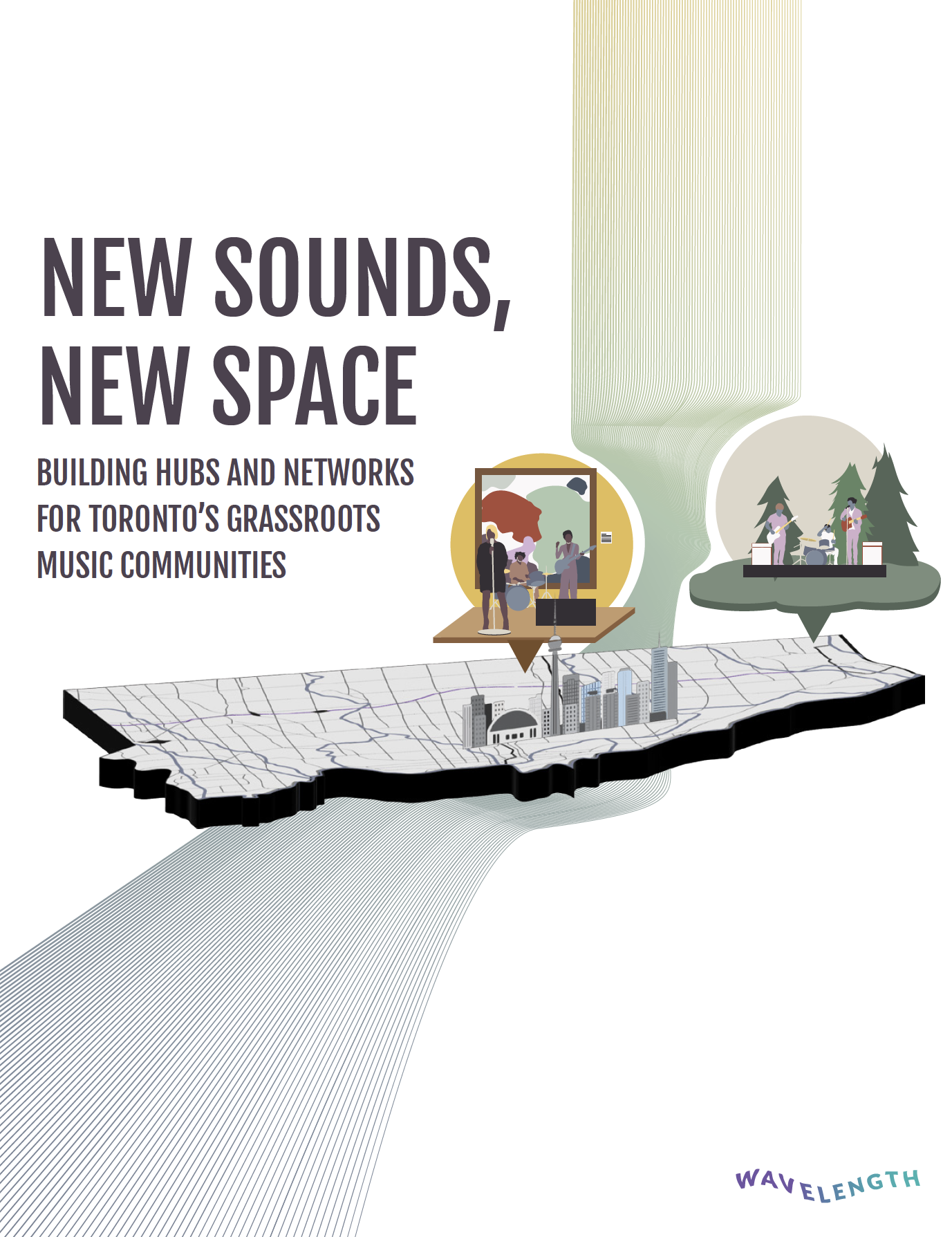
LESSONS FROM TORONTO’S PAST // WHAT’S WORKING: CASE STUDIES FROM TORONTO MUSIC NOW
Artscape’s collapse and TMAC’s failed hub at 32 Lisgar highlight the pitfalls of fragmented governance and developer-dependent financing. But recent successes — such as Small World Music’s newly acquired space, Hugh’s Room Live’s innovative community financing, and It’s Ok* Studios’ “meanwhile-use” tenancy — show that space tenure and community-oriented operating models are possible and successful.
CONSIDERING: STAKEHOLDER ENGAGEMENT FINDINGS
Our extensive consultations with music promoters/presenters found strong demand for:
- Affordable, accessible small to mid-size venues suitable for a variety of genres and audiences
- Shared support services (e.g., rehearsal and recording facilities, support services for artists)
- Inclusive, non-institutional spaces for youth and artists representing equity-deserving groups
- Governing structures based on principles of autonomy, and avoiding top-down control
In forging a path forward, our findings underscore that established, commercial models — which represent 90% of Toronto’s venues — fall short of meeting important community goals, yet upstart initiatives and non-profits risk instability without intentional support and sustainable planning.
BRINGING HUBS TO A COMMUNITY NEAR YOU
Drawing from real-life examples in Toronto and Ontario, we outline six pathways that interface the public, private, and non-profit sectors to bring music hubs online, outlining their pros and cons:
- Municipal-run
- Non-profit/community-led
- Community-municipal hybrid, version 1: community management
- Community-municipal hybrid, version 2: municipal management
- Community-commercial hybrid, version 1: event venue
- Community-commercial hybrid, version 2: developer contribution
These options, united by creative, context-specific partnerships, demonstrate the possibility of successfully balancing economic and real estate conditions with grassroots cultural stewardship.
There is no one-size-fits-all solution for Toronto’s diverse music ecology, which is why we do not recommend one music hub, but rather advocate for a network of community-focused hubs that restore missing rungs in the venue ladder, foster a local music culture, and build resilience through sustainable ownership and financing.
Policy Recommendations
The grassroots music community is driven by creative and entrepreneurial practitioners who benefit from a supportive policy environment. Based on our findings, we advance six policy recommendations to support a sustainable network of music spaces relevant to municipal, provincial, and federal levels
▲ = municipal ● = provincial ■ = federal
- Modernize land use planning to unlock new music spaces ▲ / ●
- Expand tax incentives to support the full music ecosystem ▲ / ●
- Require major developments to contribute to permanent cultural infrastructure ▲ / ● / ■
- Create a Toronto music space inventory and opportunity strategy ▲
- Establish a music space acquisition and partnership fund ▲ / ● / ■
- Protect existing grassroots music venues through planning and redevelopment policy ▲ / ●