
Wavelength launches in February 2000 as a weekly Sunday-night series at cozy second-floor club Ted’s Wrecking Yard in Little Italy. Post-rock and shoegaze bands share stages with free-jazzers and electronic experimentalists. Admission is Pay-What-You-Can and the series is promoted through a photocopied monthly ‘zine that interviews the performers. Soon, Wavelength becomes a social hub for Toronto’s growing indie scene, and hosts key early gigs by Broken Social Scene, Constantines, and Hidden Cameras. Tragedy strikes when Ted’s Wrecking Yard unexpectedly closes in late 2001, but the following year the weekly series moves to College Street nacho palace Sneaky Dee’s, which becomes its longest-running home. 2003-04 sees Canadian bands explode onto the world stage, and Wavelength is swept up in the optimistic era of “Torontopia.” The WL anniversary fest evolves into a multi-venue experience. The ‘zine gets printed in glorious colour, until the Internet takes over.
The Zine Era (2000-2004)
The Zine Era (2000-2004)
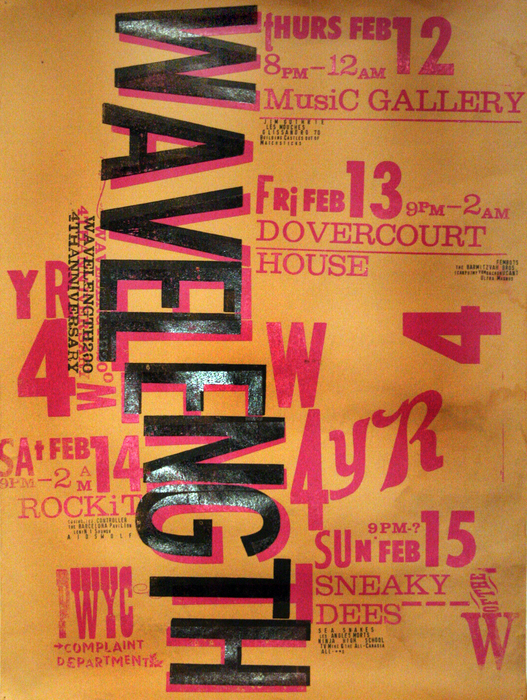
Wavelength finds its footing in an increasingly Internet-reliant world, establishing itself as a key touring stop for national acts and building community through local message boards. The fun continues IRL: Sunday nights at Sneaky Dee’s remain a dependable staple on College Street while the artsy gentrification ramps up on Queen West. Memorable performances include California art-rockers Xiu Xiu, one of Owen Pallett’s first shows as solo violin looper Final Fantasy, Toronto femcee Masia One, and Fucked Up headlining a raging Halloween party with actual Jack-o-Lanterns on their heads.
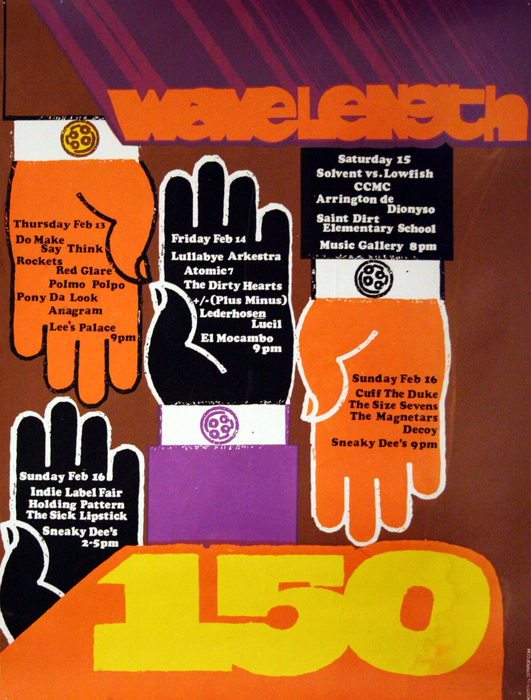
Wavelength perfects its Winter Festival formula — a kickass lineup combined with an intriguing mix of venues over one long weekend — and overhaul the ‘zine after a brief hiatus due to behind-the-scenes changes with full-colour covers, a brand-new logo, and an epic dance-punk launch party. It’s right in time for Torontopia, a new movement of civically-minded arts initiatives bolstered by the day-long Northeast blackout and a progressive new mayor. Memorable performances include Holy Fuck’s first-ever set, manic freak-folk by Owen Pallett’s band Les Mouches, and Can’s Damo Suzuki backed up by Wavelength all-stars.
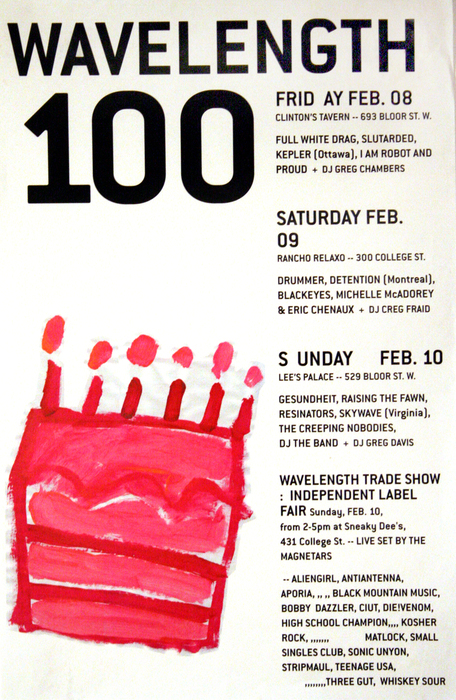
After the closure of Ted’s Wrecking Yard and similarly minded club El Mocambo, morale in the Toronto music scene is at a low ebb, and Wavelength’s organizers feel unmoored at the 500-capacity Lee’s Palace. In May, they move the weekly series to Sneaky Dee’s, blocks away from its first home. Within a couple of months, Sunday nights are packed again. Memorable performances include Ottawa’s Rhume (and a live wrestling match), Toronto new wave pioneer Nash the Slash, and Broken Social Scene just as they were becoming worldwide indie rock heroes (the venue is so overstuffed the group’s family members have to be smuggled into the club).
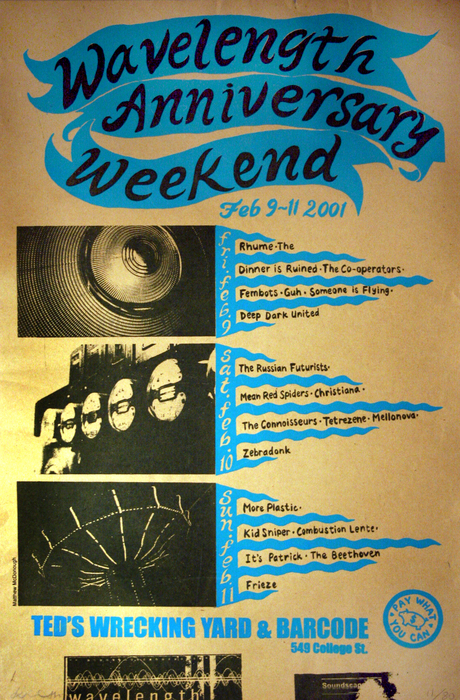
Wavelength celebrates their 1st anniversary and 50th weekly show with Wavelength 50, featuring 19 bands on two stages, and their 1.5th anniversary and 75th weekly show with Wavelength 75, a day-long event. Ted’s Wrecking Yard, their home venue, is shut down in October due to arrears in rent, and Wavelength relocates its Sunday night series to well-established rock club Lee’s Palace in the Annex. Memorable performances include the Constantines playing to a packed house, Sufjan Stevens playing to a dozen people, the Hidden Cameras playing with backup dancers, and Do Make Say Think playing five days after 9/11.
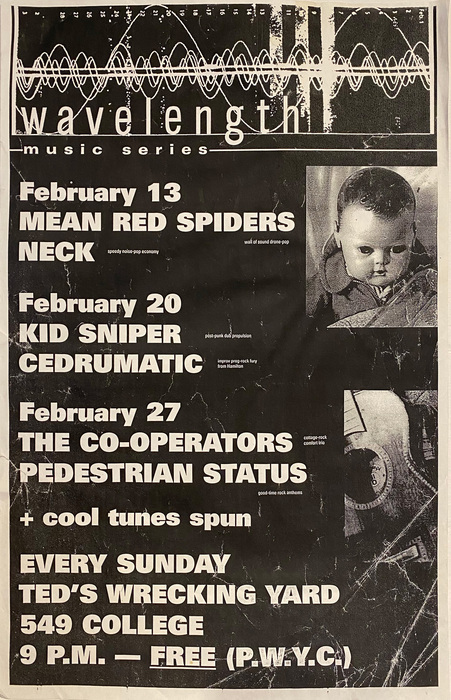
In February, Wavelength begins its weekly residency at Ted’s Wrecking Yard, a 200-capacity second-floor club in Little Italy. The shows bring together diverse groups that might otherwise never play on the same bill, and the unique, artsy vibe is bolstered by irreverent emcee Doc Pickles and psychedelic projection artist General Chaos Visuals. Memorable performances include Peaches’ farewell party celebrating her move to Berlin, a solo acoustic set by New Pornographers offshoot Destroyer, and a solo keyboard set by Kevin Drew as “John Tesh Jr. & the Broken Social Scene.”